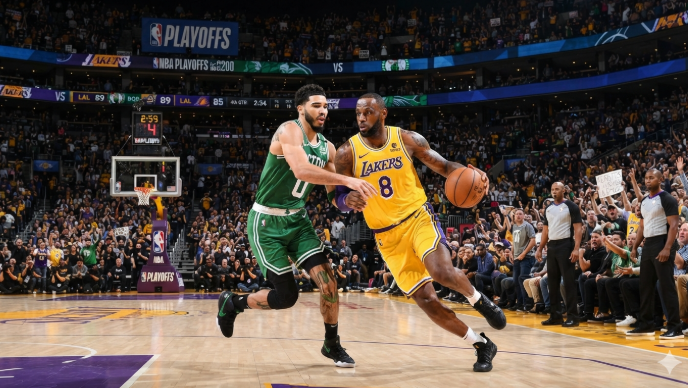
NBA: Complete Guide to Teams, Players, Seasons, Standings, and Playoffs
The NBA is one of the world’s most popular professional basketball leagues. It brings together elite players, famous teams, and millions of fans. The league is known for fast games, skilled athletes, and exciting playoff races. Every season creates new stories, rivalries, records, and memorable moments. Fans follow games through television, streaming platforms, team websites,…
The NBA is one of the world’s most popular professional basketball leagues. It brings together elite players, famous teams, and millions of fans. The league is known for fast games, skilled athletes, and exciting playoff races. Every season creates new stories, rivalries, records, and memorable moments. Fans follow games through television, streaming platforms, team websites, and social media. They also track scores, player statistics, and league standings throughout the year.
For new fans, understanding basketball can seem difficult at first. There are many teams, rules, positions, and statistics to learn. This guide makes those topics simple. You will learn how the league works and why it attracts so much attention. We will also explain the regular season, playoffs, conferences, teams, players, statistics, and championship race. Whether you are a new basketball fan or a long-time follower, this guide offers useful information in one place.
What Is the NBA?
The NBA stands for the National Basketball Association. It is the major professional basketball league in North America. The league features teams from the United States and Canada. These teams compete during a long regular season before entering the postseason. The league has become a major part of global sports culture. Its players are watched by fans across many different countries.
Basketball in the league combines speed, teamwork, athletic ability, and strategy. Teams try to score more points than their opponents before the game ends. Players must attack, defend, pass, rebound, and make smart decisions. Coaches create game plans based on their team’s strengths. They also study opponents and make changes during games. This combination makes professional basketball both entertaining and highly tactical.
How Does the NBA Season Work?
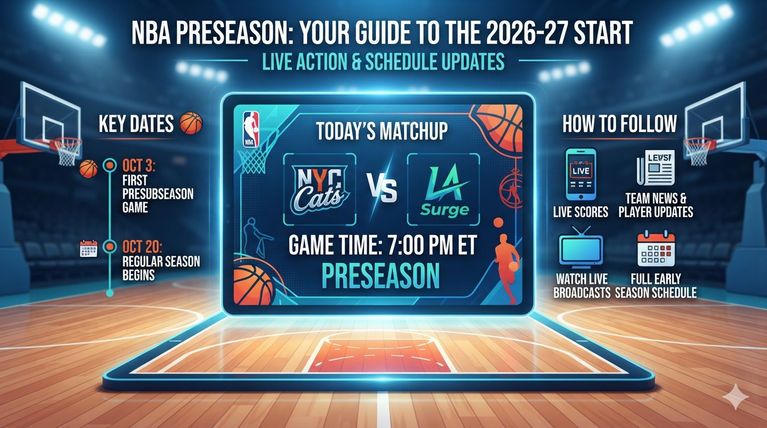
The NBA season has several important stages. It generally includes preseason games, the regular season, the Play-In Tournament, playoffs, and the NBA Finals. Each stage serves a different purpose. Preseason games help teams prepare for competitive basketball. The regular season determines standings and postseason positions. Teams must remain consistent because every win and loss can affect their final position.
After the regular season, eligible teams compete for playoff positions. The Play-In Tournament adds another competitive opportunity for teams near the postseason cutoff. The playoffs then feature elimination series between successful teams. Winning a playoff series requires strong performances over multiple games. The final teams eventually compete for the championship. This structure creates a long journey from opening night to the championship series.
NBA Teams and Conferences
The NBA is divided into two major conferences. These are the Eastern Conference and Western Conference. Each conference contains multiple teams. Those teams are also organized into divisions. However, conference standings are especially important when postseason positions are determined.
Every franchise has its own identity, history, and fan base. Some teams have won many championships, while others are still building their legacy. Team success can change quickly because of player development, trades, coaching decisions, and free agency. A strong roster can turn a struggling team into a playoff contender. Likewise, injuries or major roster changes can quickly change expectations.
| Conference | Main Purpose | What Fans Watch |
| Eastern Conference | Groups teams in the eastern side of the league | Standings and playoff race |
| Western Conference | Groups teams in the western side of the league | Standings and playoff race |
| Divisions | Organize teams into smaller groups | Rivalries and scheduling |
| Playoff Field | Determines postseason matchups | Seeds and series |
| NBA Finals | Decides the league champion | Championship competition |
NBA Players and Positions
Players are one of the biggest reasons fans follow the NBA. Each athlete brings different skills to the court. Traditional basketball positions include point guard, shooting guard, small forward, power forward, and center. Modern basketball can be more flexible. Players often perform several roles instead of staying in one traditional position.
Point guards often organize the offense and create opportunities for teammates. Shooting guards usually contribute scoring and perimeter shooting. Forwards can score, defend, rebound, and handle the ball. Centers often provide size, rebounding, interior defense, and close-range scoring. However, modern players can combine many skills. A versatile player may score, pass, defend, and rebound at a high level.
How NBA Standings Work
The NBA standings show how teams are performing during the regular season. A team’s record includes wins and losses. Teams with stronger records generally earn better postseason positions. However, standings involve more than simply looking at wins and losses. Tiebreaker rules can become important when teams finish with similar records.
Fans often check standings when the postseason approaches. A few games can make a major difference in the playoff race. Teams may compete for home-court advantage or direct playoff qualification. Others may fight to stay above the Play-In Tournament line. Understanding standings helps fans see the bigger picture. A single game can affect several teams because the league has a closely connected schedule.
NBA Statistics Every Fan Should Know
Statistics help explain player and team performance. Basic basketball statistics include points, rebounds, assists, steals, blocks, and turnovers. Shooting percentages are also important. They show how efficiently a player converts different types of shots. More advanced statistics can provide deeper information about impact and efficiency.
For example, points show scoring production. Rebounds measure control of missed shots. Assists show passes that directly lead to baskets. Steals measure defensive takeaways, while blocks show successful defensive challenges near the basket. Fans can also study three-point percentage, free-throw percentage, field-goal percentage, and plus-minus numbers. Looking at several statistics together usually gives a better picture than focusing on one number.
| Statistic | Meaning | Why It Matters |
| Points | Total points scored | Shows scoring production |
| Rebounds | Recovered missed shots | Shows work around the basket |
| Assists | Passes leading to baskets | Shows playmaking |
| Steals | Defensive takeaways | Shows defensive activity |
| Blocks | Stopped shots | Shows rim protection |
| Turnovers | Lost possessions | Shows ball-control issues |
| FG% | Field-goal percentage | Measures shooting efficiency |
| 3P% | Three-point percentage | Measures long-range shooting |
| FT% | Free-throw percentage | Measures free-throw accuracy |
NBA Regular Season Games
Regular season games form the foundation of the NBA calendar. Teams play many games against opponents from different parts of the league. The schedule includes home and road games. Players must handle travel, demanding competition, and a long calendar. Maintaining health and consistency can be just as important as having individual talent.
Every game offers teams a chance to improve their record. Coaches may experiment with lineups early in the season. Later, they often become more focused on playoff positioning. Some teams may rest players when appropriate, especially during demanding stretches. Fans can learn a lot by watching how teams respond to different opponents and situations.
NBA Playoffs Explained
The NBA playoffs are where the competition becomes more intense. Teams compete in series rather than single elimination games. A team must win enough games in a series to advance. This format rewards teams that can perform consistently against the same opponent.
Playoff basketball also creates different strategic challenges. Coaches have more time to study opponents between games. Defensive plans can change from one game to another. Players must adapt when opponents remove their favorite scoring options. Injuries can also influence a series. Because of these factors, playoff success requires depth, preparation, teamwork, and mental strength.
The NBA Finals and Championship
The NBA Finals represent the final stage of the postseason. The two remaining teams compete for the league championship. Winning the Finals is one of the highest achievements available to a professional basketball team. Players who perform well during this stage can become part of basketball history.
The championship series attracts attention from casual viewers and dedicated fans. Every possession can become important. Coaches make detailed adjustments, while players must handle pressure. A championship often reflects months of preparation and teamwork. It can also shape how a franchise is remembered for many years.
NBA Draft and Young Talent
The NBA Draft gives teams an opportunity to add young talent. Prospects can enter the league after developing through college basketball, international competition, or other pathways. Teams evaluate players through games, interviews, workouts, and scouting reports.
Draft position can be valuable because teams selecting earlier may have access to highly regarded prospects. However, draft position does not guarantee future success. Player development remains extremely important. Coaches and development staff help young athletes improve their skills, physical preparation, and understanding of professional basketball. Some players make an immediate impact, while others need several seasons to reach their potential.
NBA Trades and Free Agency
Team rosters can change through trades and free agency. A trade occurs when teams exchange eligible players and other assets under league rules. Free agency allows eligible players to negotiate with teams. These processes can dramatically change a team’s direction.
A successful roster move can solve a team’s biggest weakness. For example, a team with strong scorers may need better defense or rebounding. Another team may need additional shooting around its star player. Front offices must consider salary rules, team chemistry, player development, and long-term plans. Smart roster management can be a major part of championship success.
Why NBA Basketball Is So Popular
The NBA has developed a huge worldwide audience because basketball is easy to follow and highly entertaining. The game combines individual creativity with team strategy. Fans can enjoy powerful dunks, long-range shots, defensive plays, and dramatic finishes.
The league also has a strong international presence. Players from many countries have become important contributors. International fans can follow teams and athletes through digital platforms and social media. The global growth of basketball has helped create new supporters across different regions. Young fans can also connect with the sport through video games, highlights, and youth basketball programs.
How to Follow NBA Games
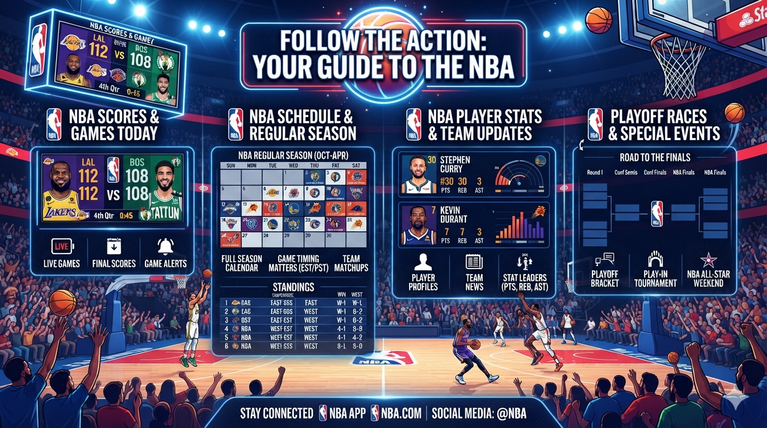
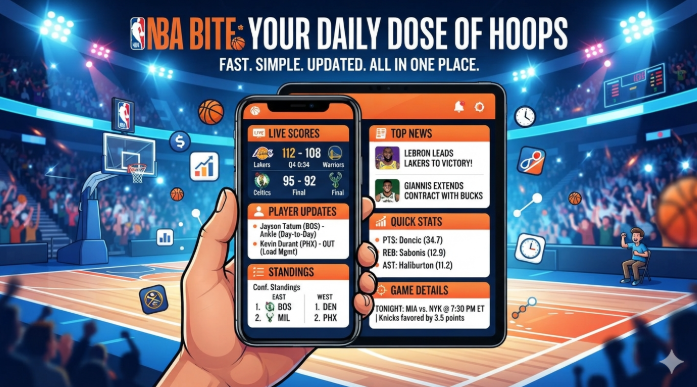
Following the NBA is easier when you understand the information available around each game. Fans can check official schedules, team pages, standings, box scores, and player statistics. Live scores provide immediate updates, while box scores explain individual performances after games.
It is also useful to follow trusted sports reporting. Reliable sources can provide injury updates, lineup information, interviews, and analysis. Fans should avoid treating social media rumors as confirmed news. Checking official team or league information can help separate facts from speculation. This approach makes following the season more enjoyable and informed.
NBA History and Its Legacy
The NBA has a long history filled with legendary teams and players. Different eras have introduced different styles of basketball. Some periods focused heavily on physical interior play, while later eras placed greater emphasis on speed and three-point shooting.
The league’s history is also shaped by iconic rivalries and championship teams. Great players have influenced how younger athletes approach the game. Records and achievements from previous generations continue to provide context for today’s performances. Understanding this history helps fans appreciate why certain players, teams, and moments remain important.
Tips for New NBA Fans
New fans do not need to learn every rule immediately. Start by watching complete games and following one or two teams. Learn the basic scoring system first. Then study positions, fouls, substitutions, and common statistics.
It can also help to follow one player closely. Watch how that player moves without the ball, defends, passes, and creates scoring opportunities. Over time, basketball strategy becomes easier to understand. Asking questions and comparing different teams can also improve your knowledge. Most importantly, enjoy the game while learning at your own pace.
Frequently Asked Questions About NBA
1. What does NBA stand for?
NBA stands for National Basketball Association. It is the major professional basketball league in North America. The league features teams from the United States and Canada. It has developed a large international fan base and includes many highly skilled professional athletes.
2. How many teams are in the NBA?
The league currently has 30 teams. These franchises are divided between the Eastern Conference and Western Conference. Each conference contains 15 teams. The teams compete throughout the regular season before eligible franchises enter the postseason competition.
3. What is the NBA Play-In Tournament?
The Play-In Tournament gives teams near the postseason cutoff another path into the playoffs. It takes place after the regular season and before the main playoff bracket. The format creates additional competitive games and can make the final postseason positions more exciting.
4. How long is an NBA game?
A regulation game contains four quarters, with each quarter lasting 12 minutes. However, the complete event lasts much longer because of timeouts, fouls, halftime, reviews, substitutions, and other stoppages. Overtime periods are added when teams are tied after regulation.
5. What are NBA standings?
Standings show how teams are performing during the regular season. They include information such as wins and losses. Standings help determine postseason positioning. They can become especially important near the end of the regular season when teams compete for playoff places.
6. What is the NBA Finals?
The NBA Finals are the championship series at the end of the postseason. The two conference champions compete against each other. The team that wins the required number of games in the series becomes the league champion for that season.
Conclusion
The NBA offers much more than exciting basketball games. It combines athletic talent, coaching strategy, statistics, team building, history, and passionate fans. Understanding the league structure makes every game more interesting. You can follow standings, study player performances, learn team strategies, and enjoy the postseason with greater knowledge.
For new fans, the best approach is simple. Start with the basic rules and follow a team or player you enjoy. Then explore statistics, standings, rivalries, and playoff strategies. With time, the details will become easier to understand. Whether you watch every game or only follow major events, the NBA provides a constantly changing sports story. Its combination of skill, competition, and entertainment continues to make professional basketball a major part of global sports culture.